Costa Rica Travel FAQ
The questions travelers ask us most, answered short, with official sources behind every fact and a link wherever there is more to say.
Last reviewed by our team in Costa Rica: . By The My Costa Rica team in San José.
Quick answer
- Where: Central America, between Nicaragua and Panama, with the Pacific to the west and the Caribbean to the east.
- Capital: San José. Language: Spanish. Time: UTC minus 6, no daylight saving.
- Entry for US and Canadian citizens: a passport valid for your stay, a return ticket, no visa for up to 180 days.
- Money: the colón, with US dollars and major cards widely accepted.
- Emergencies: dial 911.
About Costa Rica
Where is Costa Rica?
In Central America. It borders Nicaragua to the north and Panama to the south, with the Caribbean Sea to the east and the Pacific Ocean to the west. See our maps and geography pages.
Is Costa Rica in the Caribbean?
No. Costa Rica is a Central American country, but it has a Caribbean coast, with Puerto Viejo, Cahuita and Tortuguero on it. Read our Caribbean guide.
Is Costa Rica part of the United States?
No. Costa Rica is an independent country in Central America with its own government, currency and passport rules. US citizens need a passport to visit.
What is the capital of Costa Rica?
San José, in the Central Valley. Most international flights land at the San José airport or at Liberia in Guanacaste. More on San José.
What is the population of Costa Rica?
About 5.2 million. The national statistics institute, INEC, projects 5,191,823 people at 30 June 2025. See our population page.
What language do they speak in Costa Rica?
Spanish, the official language under article 76 of the Constitution, which also protects the country’s indigenous languages. Our team plans your trip in English. See our language guide.
What time zone is Costa Rica in?
UTC minus 6 all year, with no daylight saving. That matches Chicago from early November to mid-March and Denver from mid-March to early November. More on our time page.
What does pura vida mean?
It translates as “pure life”, and the tourism board says it means much more. Costa Ricans use it as hello, thank you and “all good”. Read more about pura vida.
Nature and weather
How many volcanoes does Costa Rica have?
At least 290 volcanic centres, says the National Seismological Network at the University of Costa Rica, most of them extinct or dormant. Only five are historically active: Turrialba, Poás, Irazú, Arenal and Rincón de la Vieja. The other national observatory, OVSICORI, mapped 112 volcanic structures in 1987, one of its scientists told the press in 2016. See our volcanoes page.
Does it snow in Costa Rica?
Almost never. The tourism board says that above 3,000 metres, in the páramo, temperatures can fall to 0 °C (32 °F) with occasional hail and snow. Everywhere you are likely to stay, it is warm or mild.
When is the rainy season in Costa Rica?
The national weather service says May to October on the Pacific side, with November a transition month; the tourism board says May to November. The Caribbean has no defined dry season. Month by month detail is in when to visit.
How much of Costa Rica is protected?
The tourism board gives several figures on different pages: 30%, 26%, 25% and “more than a quarter” of the country. The national parks service, SINAC, counted 150 protected wild areas in 2025. See our national parks guide.
When can you see sea turtles in Costa Rica?
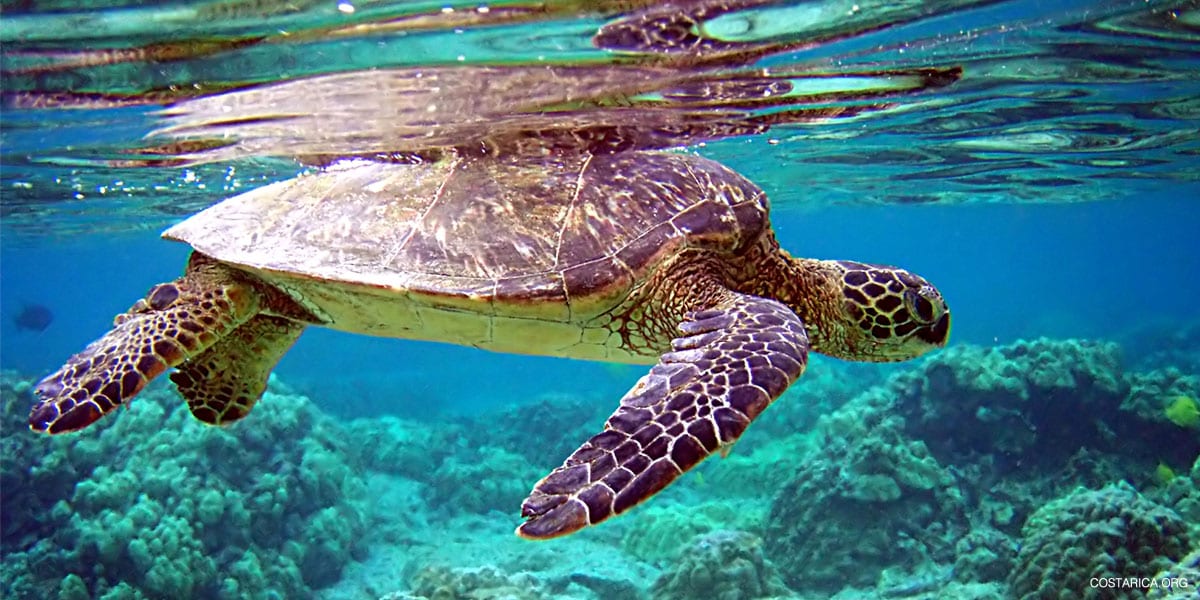
At Tortuguero, SINAC says nesting runs June to October, and the Sea Turtle Conservancy says green turtles nest through November. Olive ridleys nest in mass arrivals at Ostional all year, once or twice a month. See Tortuguero National Park.
When can you see whales in Costa Rica?
SINAC says humpback whales visit in two seasons: from the north, December to April, and from the south, July to November.
Planning your trip
When is the best time to visit Costa Rica?
For the Pacific beaches, the dry season, December to March by the national weather service or to April by the tourism board. For the Caribbean, February to March and September to October are drier. Every month has something: see when to visit.
How many days do you need in Costa Rica?
A week works for a first trip: 3 nights in the rainforest, usually at Arenal, and 4 at a beach. Nine or ten days add a third stop, such as Monteverde or the Osa Peninsula.
Which airport should I fly into?
It decides the whole trip. Liberia opens Guanacaste and its beaches. San José is the gateway to Manuel Antonio and the Osa Peninsula. Have you looked at flights yet? If not, we are happy to advise on which airport fits the trip you want.
Do you book international flights?
No. We plan everything inside Costa Rica: hotels, private transfers, tours, the airport greeter and 24/7 support. You book your own international flights, and we build the trip around them.
How does planning a trip with you work?
Tell us your dates, who is traveling and what you love, through the request form. One of our Costa Rica Specialists builds an itinerary by hand, with hotels we know at 3-star and above, then adjusts it with you until it is right.
Entry and money
What do I need to enter Costa Rica?
For US and Canadian citizens: a passport valid for your stay and in good condition, and a return or onward ticket. Proof of funds can be asked for. Full list in what you need.
Do I need a visa for Costa Rica?
Not as a US or Canadian tourist, for stays up to 180 days. The immigration officer decides the actual stay. Other nationalities: see our visa page.
Can I use US dollars in Costa Rica?
Yes. The colón is the currency, and the tourism board says US dollars and major credit cards are widely accepted. More on our currency page.
How does tipping work in Costa Rica?
Restaurants with table service add a 10% service charge by law, shown as “Servicio 10%”; anything more is voluntary. The tourism board describes the 10% as included in the final price. Details in how to get ready.
What plugs does Costa Rica use?
The same two-prong plugs as the US and Canada. The tourism board says 110 volts; WorldStandards says 120 volts at 60 Hz. North American chargers work as they are.
Health and safety
Is Costa Rica safe?
Yes, for most visitors who take normal care. The US State Department rates Costa Rica Level 2 of 4, “exercise increased caution”, because of crime. Petty theft is the most common problem, and rip currents are the bigger risk at the beach. Our full guide: Is Costa Rica safe?
Can you drink the tap water in Costa Rica?
The two official sources disagree. The tourism board says tap water is drinkable, with bottled water suggested only in a few rural areas; the US State Department says it is often not safe. With small children or a sensitive stomach, drink bottled or filtered water.
Do I need vaccines for Costa Rica?
The CDC advises routine vaccines up to date and hepatitis A for unvaccinated travelers, among others. See your doctor at least a month before. Our vaccinations page has the full list.
Do I need travel insurance?
It is not an entry requirement today, and we highly recommend it, including medical cover and evacuation.
Getting around
Should I drive in Costa Rica?
You can, on your home licence, but most of our clients never drive. They travel by private transfer with a Costa Rican driver who knows the roads. See getting around.
How long are the drives between destinations?
On our own trips: Liberia airport to Arenal about 3 hours, San José airport to Arenal 3 to 3.5 hours, Arenal to Manuel Antonio about 5 hours, and Liberia to Tamarindo about 2 hours.
Are there domestic flights in Costa Rica?
Yes, on small planes, with tight luggage limits: Sansa allows a carry-on of up to 4.5 kg (10 lb). See domestic flights and what to pack.
More from our travel guides
Still have a question? Ask the people who live here
My Costa Rica is a destination management company based in Costa Rica since 2004. We contract directly with hotels, drivers and guides, so every trip is built by people who live here and supported by our own team 24/7 while you travel.
Over 25,000 Satisfied Clients Since 2004!





Recent Posts

Costa Rica Weather in December
Summer begins on the Pacific side in December. The first two weeks are a favorite of ours, before it gets…
Costa Rica Weather in November
The rain eases through November as we move toward summer on the Pacific side, and the first northern humpbacks return…
Costa Rica Weather in October
October is one of the two wettest months on the Pacific side, and one of the quietest of the year.…
Costa Rica Weather in September
September and October are the wettest months on the Pacific side. This is when the Caribbean coast has its own…