
Capital · Central Valley
San José
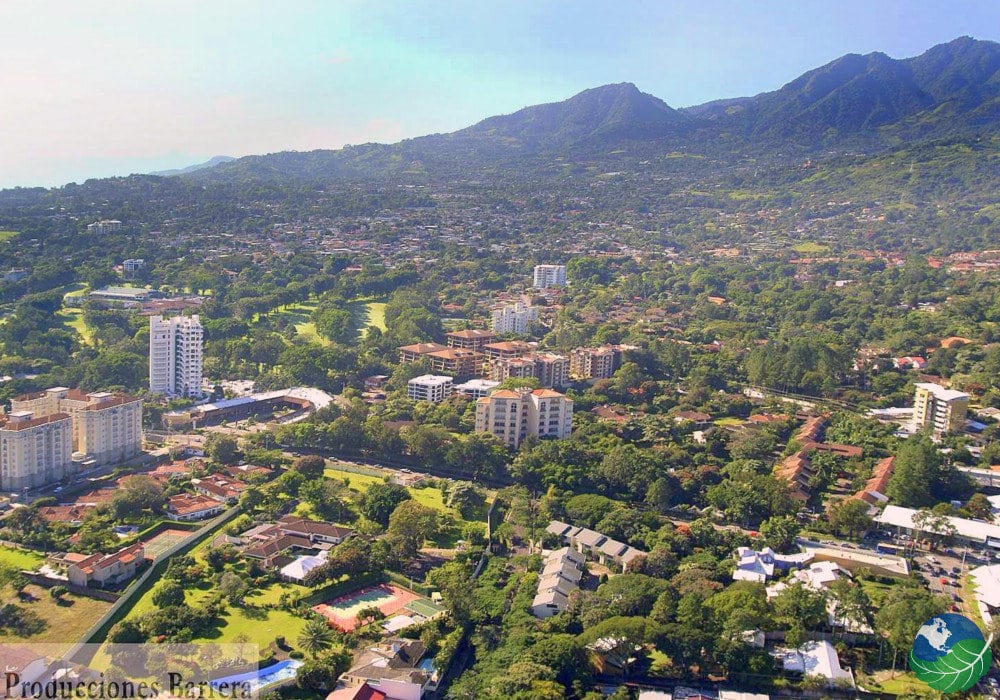
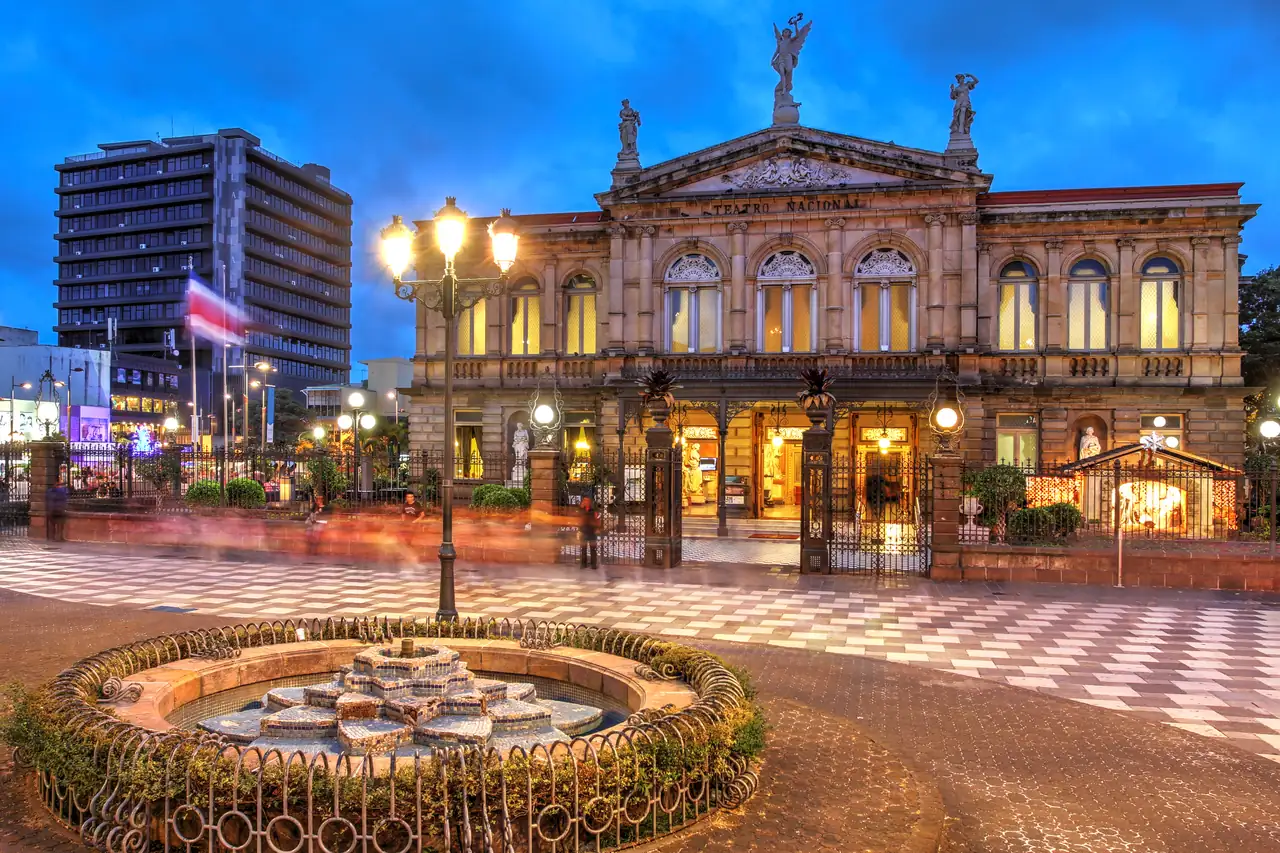
The capital and the largest city, with the National Theatre, the Gold Museum and the Central Market. Most of our clients spend 1 night here.
30 min from SJORead the guide
San José is the capital. Here are 18 cities and towns on one map: the two by the international airports, the towns beside the volcanoes and parks, and the ports on both coasts.
San José is the capital of Costa Rica and its largest city: the canton of San José alone has 352,381 people (INEC, 2022). Most international flights land at the Juan Santamaría airport in Alajuela, about 30 minutes from the city, and Liberia, the capital of Guanacaste, has its own international airport for the northern Pacific beaches. Most of our clients spend a night in a city at most, on arrival or before flying home, and the rest of the trip somewhere green or on the beach. The towns that matter more are the ones beside what you came for: La Fortuna below Arenal Volcano, Quepos beside Manuel Antonio, San Gerardo de Dota for the quetzal.
The 18 cities and towns, numbered from the ones our clients stay in most.
Each one links to our full guide: what is there, how to get there and where to stay.
The capital and the largest city, with the National Theatre, the Gold Museum and the Central Market. Most of our clients spend 1 night here.
Home of the Juan Santamaría International Airport, so the easy choice when a flight lands late or leaves early. Poás Volcano is about an hour away.
The country town below Arenal Volcano, and the base for its hot springs, waterfall rappelling and white water rafting.
The capital of Guanacaste, with its own international airport, cowboy traditions and whitewashed colonial houses. The gateway to the Guanacaste beaches.
The City of Flowers, founded in 1705, with a cathedral from 1796 whose bells came from Cuzco. Smaller and quieter than San José, close to the airport.
San José's upscale suburb to the west, with the Multiplaza mall, high-end hotels and restaurants, and the city close by but out of sight.
The harbour town next to Manuel Antonio National Park, with a marina and a name for big game sportfishing.
A cloud forest valley in the Talamanca Mountains where more than 170 bird species have been seen, the resplendent quetzal among them.
Rainforest along the Sarapiquí River, one of the last places to see the endangered great green macaw, beside the La Selva Biological Station.
The old port on the Gulf of Nicoya, where the ferry crosses to the Nicoya Peninsula for Tambor, Montezuma and Santa Teresa.
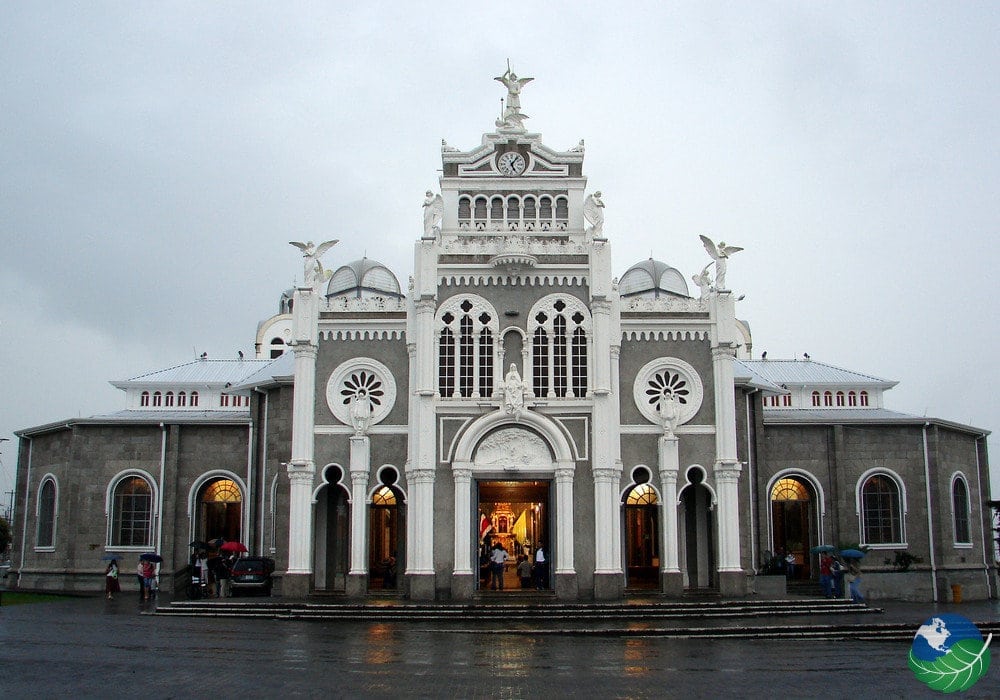
The first capital of Costa Rica, with the Basilica of Our Lady of the Angels and the ruins of its old parish church. Irazú Volcano rises above it.
Coffee farms, a colonial church and a winding river, 40 km from San José, with Tapantí National Park at the end of the road.
The town of the hand-painted oxcart, with working carreta and furniture workshops. An easy day trip from San José.
A small port on the Golfo Dulce, across the water from the Osa Peninsula, with a domestic airport just outside town.
The farming town on the road south, and the gateway to Chirripó, La Amistad and the Osa Peninsula.
A quiet farming town on the western edge of the Central Valley, about 40 km from San José, known for its oxcarts and its yearly fiesta.
The Caribbean port and provincial capital, with an Afro-Caribbean culture all its own. Cahuita National Park is south along the coast.
The main port on the Pacific coast, where the cruise ships dock, close to Carara National Park and the Tárcoles River.
| City (canton) | People, 2022 |
|---|---|
| San José | 352,381 |
| Alajuela | 322,143 |
| Cartago | 165,417 |
| Pérez Zeledón (San Isidro de El General) | 156,917 |
| Puntarenas | 141,697 |
| Heredia | 131,901 |
| Limón | 116,457 |
| Liberia | 80,130 |
Source: INEC, Estimación de Población y Vivienda 2022 (Cuadro 6.1). Figures are for the whole canton (municipality), including its rural districts, because Costa Rica has no legal city boundary.
San José. It sits in the Central Valley, surrounded by mountains and volcanoes, and the canton of San José alone has 352,381 people (INEC, 2022). The main international airport, Juan Santamaría (SJO), is in Alajuela, about 30 minutes away.
San José is the largest, with Alajuela close behind (see the table below). Alajuela, Heredia and Cartago, all in the Central Valley around it, are the other big cities, and most Costa Ricans live in this one valley. Outside it, the main cities are the ports of Puntarenas and Limón, Liberia in Guanacaste and San Isidro de El General in the south.
1 night is what most of our clients choose, on arrival if the flight lands late or before an early flight home. Alajuela, by the airport, and Heredia, 15 to 30 minutes from it, are quieter choices. Your Specialist plans it around your flights.
It depends on the beach. Liberia (LIR) opens Guanacaste and its resorts. San José (SJO) is the way to Manuel Antonio, the Osa Peninsula and Tortuguero. Arenal works from either: about 3 hours from Liberia, 3 to 3.5 hours from San José.
La Fortuna sits at the foot of Arenal Volcano, Quepos beside Manuel Antonio National Park, and San Gerardo de Dota in the quetzal's valley, about 2.5 hours south of San José. Those are the towns where our clients spend the most nights.
No. Our clients travel with a private driver who leaves on their schedule and stops when they want, so nobody has to find their way through San José traffic or the mountain roads.
Tell us what you love. A Costa Rica Specialist builds a custom itinerary around it, with private transfers, hotels we know and our team on call 24/7 while you travel.