
History and government of Costa Rica
Costa Rica’s story runs from the stone spheres of the south to 1 December 1948, the day it abolished its army. Here it is, with the places on a trip where you can still see it.
Last reviewed by our team in Costa Rica: . By The My Costa Rica team in San José.
Quick answer
-
Before 1502
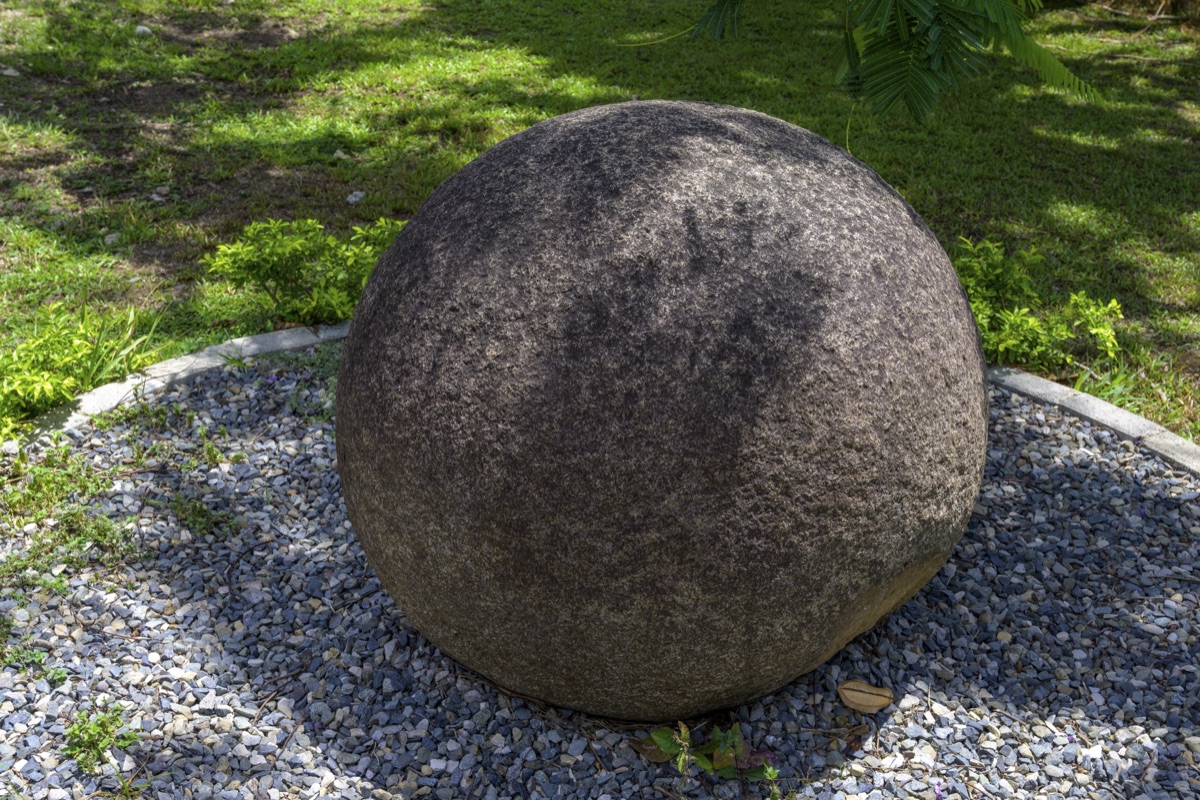
chiefdoms built Guayabo, occupied from about 1000 BC to 1400 AD, and the Diquís stone spheres, a UNESCO World Heritage site since 2014.
![A dark grey pre-Columbian stone sphere on a bed of grey gravel in a sunlit garden at Palmar Sur]()
-
1502
Columbus reached the Caribbean coast on his fourth voyage.
![Puerto Limón and its port on the Caribbean coast, seen from the air]()
-
1821
independence from Spain. The republic was declared on 31 August 1848.
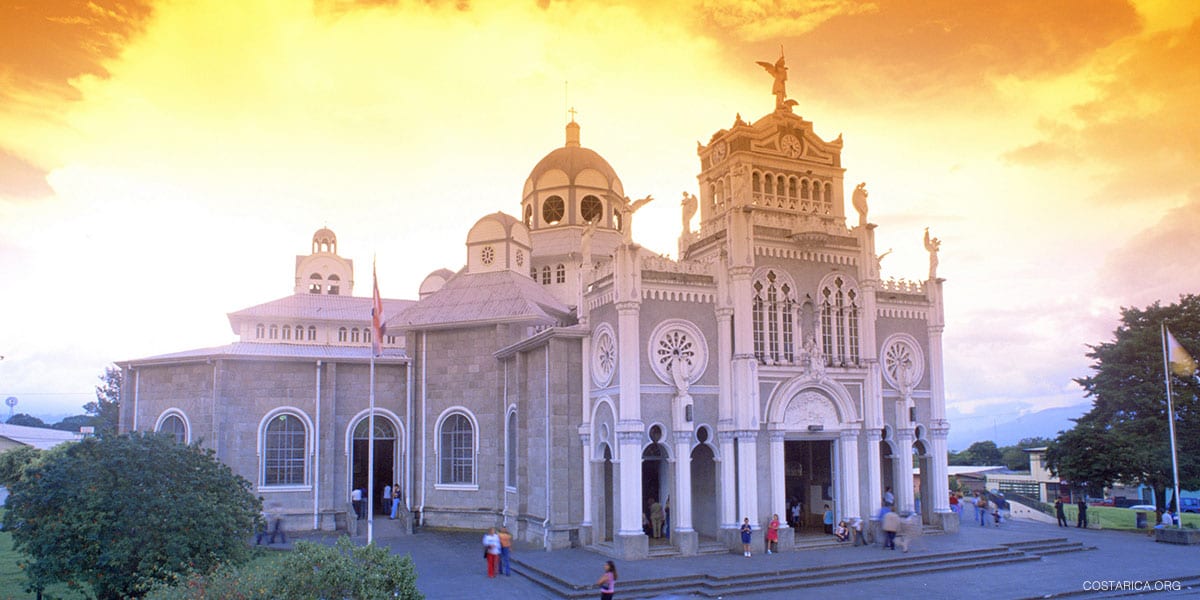
![The Basilica of Our Lady of the Angels in Cartago]()
-
1856
Costa Rica fought William Walker’s filibusters. Juan Santamaría is the national hero of that war, remembered every 11 April.
![A bronze statue of Juan Santamaría raising a torch]()
-
1948
after a short civil war, the army was abolished on 1 December.
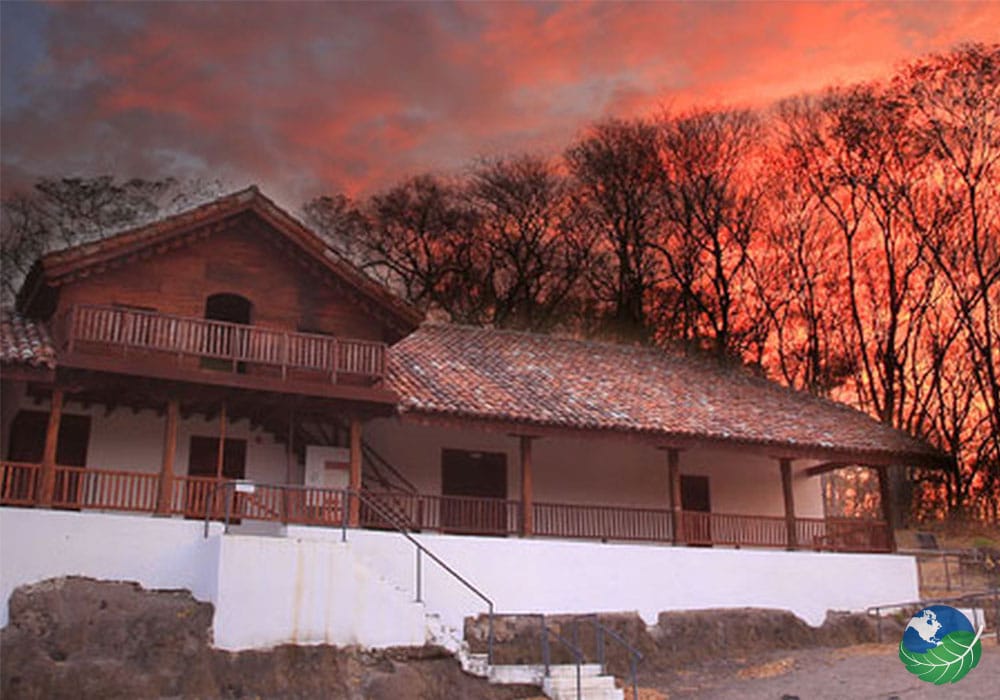
![The yellow walls of the old Bellavista barracks, now the National Museum, with its name over the door]()
-
Today
a democratic republic with a president elected every four years. Laura Fernández Delgado has been president since 8 May 2026.
![The Costa Rican flag among political party flags on a street stand]()



Before Columbus: Guayabo and the stone spheres
The oldest history you can walk through is at Guayabo National Monument. SINAC, the parks service, says the site was occupied from 1000 BC to 1400 AD, with the chiefdom at its height from around 800 AD. It has been a national monument since a law of 13 August 1973, and it opens every day from 8:00 a.m. to 3:30 p.m., holidays included. There is an entrance fee.

In the south are the stone spheres. UNESCO listed four settlements of the Diquís Delta as a World Heritage site in 2014: Finca 6, Batambal, El Silencio and Grijalba-2, home to chiefdom societies between 500 and 1500 CE. The spheres run from 0.7 metres to 2.57 metres across. In 2014 the spheres also became one of the country’s national symbols.
The one to visit is the Finca 6 Site Museum, run by the National Museum, in Palmar Sur de Osa on the road to Sierpe. When UNESCO listed the site, the other three were not yet open to the public.
Those peoples did not disappear. Eight Indigenous peoples live in Costa Rica today, in 24 territories: Cabécar, Bribri, Boruca, Ngäbe, Huetar, Maleku, Térraba and Chorotega.
Columbus, Cartago and independence
Columbus arrived in 1502, on his fourth and last voyage, at Isla Uvita in front of today’s Puerto Limón. The date depends on the source. The tourism board’s own article says 25 September 1502; other sources, including the Limón municipal band, say 18 September. Britannica says he stayed 18 days, and that the name “Rich Coast” possibly came from that visit, though the origin is disputed.
Spain’s first lasting settlement and capital was Cartago, founded by Juan Vázquez de Coronado. The city of Cartago says 1563; Britannica says 1564.
Independence came in 1821. Guatemala signed its act on 15 September 1821, and Cartago signed Costa Rica’s own on 29 October 1821. Costa Rica joined the short-lived Mexican Empire, then helped create the United Provinces of Central America in 1823, and left them in 1838. In 1823 the capital moved from Cartago to San José, after a battle at Ochomogo on 5 April. On 31 August 1848, under José María Castro Madriz, Costa Rica declared itself a sovereign republic. The flag dates from the same year: see Costa Rica at a glance.
The 1869 Constitution made primary school compulsory for girls and boys, at no cost to families, paid for by the nation.
William Walker and Juan Santamaría
In 1855 William Walker, an American soldier and adventurer, was leading filibuster troops in Nicaragua. On 20 November 1855 President Juan Rafael Mora Porras warned Costa Ricans of the threat, and in 1856 the country went to war. Costa Rica calls it the National Campaign of 1856 to 1857. Its army fought at Santa Rosa on 20 March 1856 and at Rivas on 11 April 1856, and the campaign ended with Walker’s surrender on 1 May 1857.
Juan Santamaría was born in Alajuela on 29 August 1831 and died on 11 April 1856, the day of the Battle of Rivas. He is the national hero of that war, San José’s international airport carries his name, and 11 April is a paid public holiday.
To see the story, go to the Juan Santamaría Historical and Cultural Museum in Alajuela, on the north side of the Central Park. It fills the old barracks and the old city jail, opened on 9 April 1980, and it is the only museum in the country devoted to the 1856 to 1857 campaign. Its website gives Tuesday to Saturday, 9:00 a.m. to 5:00 p.m.; a listing of the same site says Tuesday to Sunday, so check before a Sunday visit.
1948 and a country without an army
In 1917 General Federico Tinoco took power in one of the country’s few coups. Revolts and the threat of US intervention made him resign in 1919.
The big break came in 1948. A civil war began on 12 March. Wikipedia dates its end to 24 April; a US Defense Department study dates the peace to 19 April, when the Pact of the Mexican Embassy was signed. You will often read “44 days”, which matches neither. Britannica says about 2,000 people were killed.
On 1 December 1948, José Figueres, head of the founding junta, abolished the army in a ceremony at the Bellavista barracks in San José, and the building became the National Museum. You can visit it today. Article 12 of the 1949 Constitution, dated 7 November 1949, bans a permanent army and keeps only the police needed for public order. Instead of soldiers, you will see the Fuerza Pública, the coast guard, the air surveillance service and the border police.

1 December is now the Day of the Abolition of the Army, a public holiday since Ley 9803. It is one of the holidays where pay is not obligatory, unlike 11 April. The same constitution gave women the vote, and they first voted on 30 July 1950.
How Costa Rica is governed today
The Constitution gives power to the people and to three independent branches: legislative, executive and judicial. A fourth body, the Supreme Elections Tribunal (TSE), runs elections with the rank and independence of those branches.
- The president serves four years with two vice presidents, and cannot run again until eight years have passed since serving. Elections are on the first Sunday of February, and voting is compulsory under the Constitution.
- The Legislative Assembly has 57 deputies, elected by province.
- The Supreme Court has 22 magistrates, elected for eight years. Its Constitutional Chamber, the Sala IV, dates from 1989.
- Local government is 84 municipalities, whose councils are elected for four years.
Laura Fernández Delgado has been president since 8 May 2026, for the term that ends on 8 May 2030. The TSE declared her elected on 3 March 2026: she won in the first round for Pueblo Soberano, with 1,243,141 of 2,561,343 valid votes, about 48.5%. She is the country’s second woman president, after Laura Chinchilla, elected in 2010. Before her, Rodrigo Chaves served from 2022 to 2026.
The economy, as a visitor meets it
You will pay in colones or in US dollars, which the tourism board says are widely accepted. Our money guide covers cards, cash and tipping.
Coffee built the country. From the 1840s, Britannica says, a constant stream of oxcarts carried coffee from the Central Valley to Pacific ports. Then came the railway: the first direct train from Puerto Limón to San José ran on 7 December 1890, and the American Minor Keith, who made a fortune on the line, helped form the United Fruit Company in 1899. Coffee is a national symbol today, and a coffee farm visit is one of the easiest half days to add to a trip. See our tours.

The export that leads now is one most visitors never guess: precision and medical equipment. The export agency PROCOMER puts it at 48% of goods exports in 2025, and at 31% of everything exported in its same yearly report, which appears to count services too. Pineapple was 4% of goods and banana 3%. Goods exports grew 14% in 2025, and the central bank says the economy grew 4.6%. Costa Rica joined the OECD on 25 May 2021.
And tourism: the tourism board counted 2,943,991 international arrivals in 2025, 2,689,278 of them by air. 1,783,761 came through San José airport and 904,762 through Liberia, so about one flying visitor in three now lands in Guanacaste.
Sources we checked on 1 November 2026
- UNESCO World Heritage Centre: the Diquís stone spheres
- SINAC: Guayabo National Monument
- Juan Santamaría Historical and Cultural Museum: the 1856 to 1857 campaign
- National Museum of Costa Rica: the abolition of the army
- Supreme Elections Tribunal (TSE): the 2026 presidential result
- PROCOMER: Memoria 2025, exports
- Costa Rica Tourism Board (ICT): Anuario de Turismo 2025
- Britannica: History of Costa Rica
Costa Rican history: common questions
When did Columbus arrive in Costa Rica?
In 1502, on his fourth voyage, at Isla Uvita off Puerto Limón. The tourism board says 25 September 1502; other sources say 18 September. Britannica says he stayed 18 days.
When did Costa Rica become independent?
In 1821. Guatemala signed its act of independence on 15 September 1821 and Cartago signed Costa Rica’s on 29 October 1821. The country declared itself a sovereign republic on 31 August 1848.
Who was Juan Santamaría?
The national hero of the 1856 war against William Walker’s filibusters. He was born in Alajuela in 1831 and died on 11 April 1856, the day of the Battle of Rivas. San José’s international airport is named after him, 11 April is a public holiday, and his museum is in Alajuela.
Why does Costa Rica have no army?
José Figueres abolished it on 1 December 1948, after that year’s civil war, and article 12 of the 1949 Constitution bans a permanent army. The country keeps police forces for public order.
Who is the president of Costa Rica?
Laura Fernández Delgado, since 8 May 2026, for a term ending on 8 May 2030. She won the February 2026 election in the first round and is the second woman to hold the office.
What kind of government does Costa Rica have?
A democratic republic with three independent branches and a separate elections tribunal. The president serves four years, the Legislative Assembly has 57 deputies, and voting is compulsory under the Constitution.
What does Costa Rica export?
Mostly precision and medical equipment, 48% of goods exports in 2025 according to PROCOMER. Pineapple and banana follow, and coffee, the export that built the country, is now a national symbol.
More from our travel guides
Plan your Costa Rica with a team that lives here
My Costa Rica is a destination management company based in Costa Rica since 2004. We contract directly with hotels, drivers and guides, so every trip is built by people who live here and supported by our own team 24/7 while you travel.
Over 25,000 Satisfied Clients Since 2004!




Recent Posts
Costa Rica Weather in December
Summer begins on the Pacific side in December. The first two weeks are a favorite of ours, before it gets…
Costa Rica Weather in November
The rain eases through November as we move toward summer on the Pacific side, and the first northern humpbacks return…
Costa Rica Weather in October
October is one of the two wettest months on the Pacific side, and one of the quietest of the year.…
Costa Rica Weather in September
September and October are the wettest months on the Pacific side. This is when the Caribbean coast has its own…